

Project, hours and deliverables management for consulting firms.
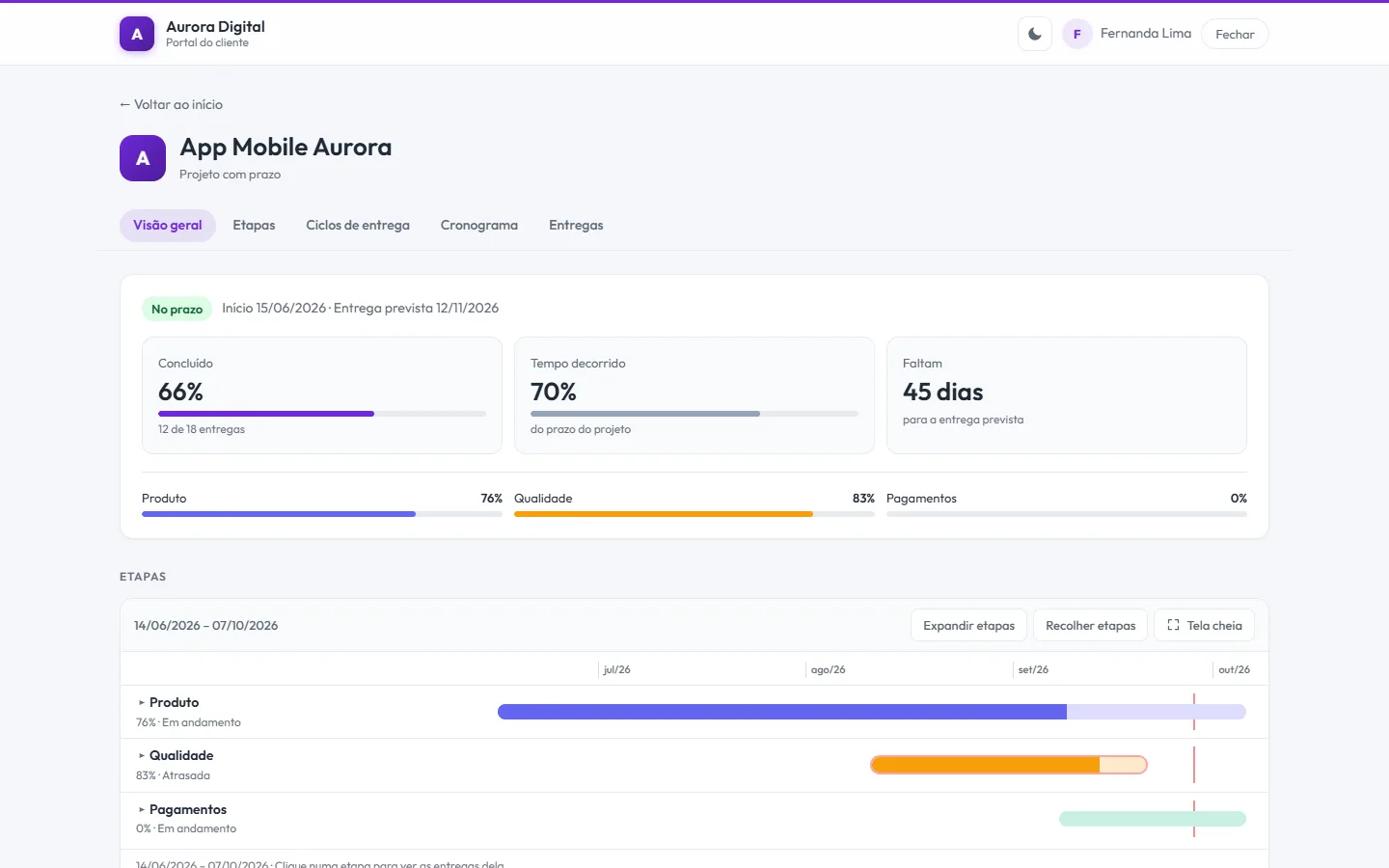
Each client is a project, each deliverable has a deadline and acceptance, and consultants' hours show the contract's margin before it ends. The status report stops being a document you put together on Friday night.
The day-to-day you recognize
Consulting sells knowledge by the hour. When time and deliverables aren't tracked, the contract quietly loses money.
Margin only shows up after the contract
The scope looked like 120 hours and took 200. Without time tracking per project, the math only gets done when it's too late to renegotiate.
The status report is a job of its own
Every client wants to know where things stand, and the people who know are the ones doing the work. Stopping to write the report is time nobody gets paid for.
Delivered doesn't mean accepted
The assessment was sent by email, the client said "okay" in a meeting, and two months later they dispute the scope. What was missing was a recorded sign-off.
Project material is scattered everywhere
Minutes in one place, proposal in another, spreadsheet with the director. Whoever joins mid-project spends the first week hunting for files.
Each client becomes a project, with deliverables and acceptance
Any template in the signup flow works once you adjust the statuses. General project, the leanest one, already comes with To do, In progress, In approval and Done, and "In approval" fits deliverable sign-off. You can rename them to match your methodology: Assessment, Proposal, Implementation.
- 1 One project per client, one workstream per phase"Sales restructuring · Grupo Veredas." Diagnosis, design, and implementation are workstreams, and the filter isolates the phase the project is actually in.
- 2 Deliverables as tasks with a due date and sign-offWhatever goes to the client enters "In approval" and only closes when the assignee decides. Who accepted it and when is recorded.
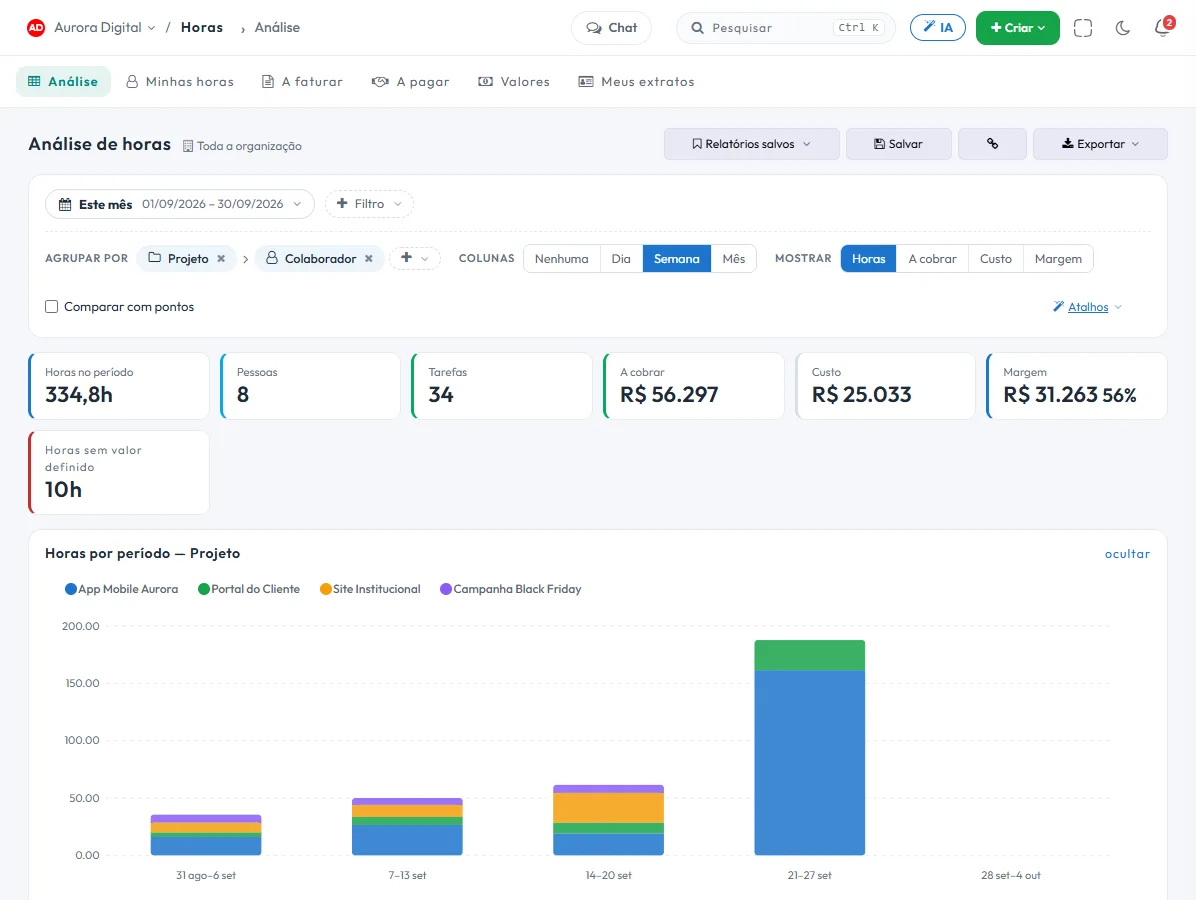
- 3 Hours by consultant, by project and by typeTime is logged on the task, and the timesheet groups it however you like: by client, by consultant, by phase. The contract margin is calculated using the hourly rate you set.
- 4 Minutes and proposals linked to the projectDocuments with versions and public links live alongside the tasks they explain. Meeting minutes can be imported and turned into tasks with AI.
What nobody else puts together in a single tool
Hours, sign-off and client updates usually add up to three spreadsheets and an email.
Margin per contract, with everyone's rate
The billing rate and the hourly cost are set per project and type. The client statement comes out as a PDF or CSV, with the invoice number recorded (Tasskee doesn't issue invoices), and the permissions to see rates and costs are separate from those of people who only log time.
Signed acceptance, on record
The sign-off form collects the client's simple electronic signature, with name, IP, date, time and the SHA-256 hash of the answers. It is not ICP-Brasil, and it serves as proof of acceptance between the parties.
The client follows along without becoming a user
The guest portal shows project progress, deliverables and comments. Guests approve right there and don't take up a seat, so the sponsor, finance and leadership get in at no cost.
The features that support this day to day
Task, schedule, ticket, form, and conversation are the same database. What changes in one place shows up in the other, with nothing to export.
Questions from people who sell knowledge
Does it work for solo consultants and for consulting firms with teams?
Can I see the margin on a contract in progress?
Can the client approve a deliverable without an account?
Does Tasskee write the status report by itself?
Does it issue invoices?
Start with the contract where the margin is a mystery
Create your account, open a project with the hourly rate, and ask your consultants to log a week of time. The margin shows up before the contract ends.